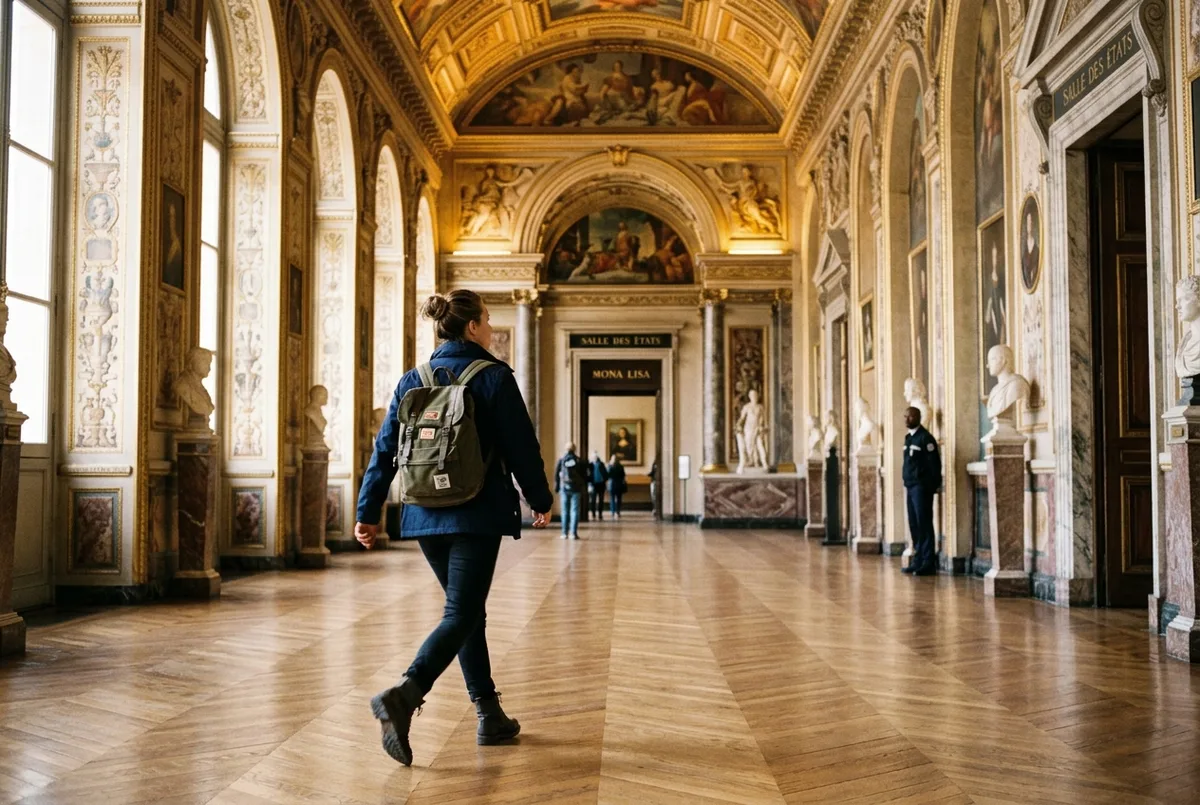
The best time to see the Mona Lisa without fighting a crowd is right at opening, in the first thirty minutes the museum is open, or in the last 90 minutes before closing on a day the building doesn’t have a late evening. Here’s what I’d actually do with that: treat the Mona Lisa as the very first or very last stop on your visit, not something you wander toward mid-morning once the museum has already filled up.
That advice is different from general Louvre crowd timing, and it’s worth separating the two. My best time to visit the Louvre guide covers when the whole museum is quietest, but the Salle des États runs on its own schedule independent of that, since every visitor eventually converges on the same room regardless of when they entered. If you haven’t settled your ticket type yet, my Mona Lisa tickets guide clears up pricing and access before you plan the timing around it.
Why Is the Mona Lisa Room Busy Even When the Museum Isn’t?
The Salle des États is the one room almost every single visitor to the Louvre wants to see, regardless of what else is on their itinerary. That means the room’s crowd level tracks the cumulative number of people who’ve entered the museum since opening, not the number currently inside the building at any given moment.
I’d think of it less like a typical gallery and more like a single bottleneck everyone eventually funnels through. A quiet morning in the rest of the museum doesn’t mean a quiet Salle des États, because visitors who came in an hour ago are still making their way there.
When Is the Mona Lisa Room Actually Quietest?
The first 20 to 30 minutes after the museum opens is the single best window, since the earliest arrivals haven’t built up yet and the room hasn’t had time to fill with the full day’s visitors. The other reliable window is the final 60 to 90 minutes before closing, particularly on a day without a late-evening extension, when a lot of day-trippers have already left for lunch, dinner or their next stop.
My honest take: of the two, I’d pick opening over closing if you only get one shot. An early arrival also means you’ve got the rest of the day ahead of you for the parts of the museum that take longer to see properly, rather than rushing them to make a closing-time deadline.
Does the Day of the Week Matter for Mona Lisa Crowds?
Yes, though less than the time of day does. Weekends and school holiday periods push crowd levels up across the whole museum, and the Mona Lisa room absorbs that extra volume directly. Midweek days outside school holidays are generally calmer, but even a quiet Tuesday-adjacent Wednesday will still see a real crowd in that specific room if you arrive mid-afternoon.
I wouldn’t lean too heavily on day-of-week alone as your main planning lever. Time of day inside your chosen day matters more for this specific room than which day of the week you pick.
Does the Season You Visit Change the Crowd Picture?
It does, and more than most travelers expect. Summer months and the stretch around Christmas and New Year’s bring a noticeably higher baseline of visitors through the whole museum, which means even the quiet windows I’d normally recommend are busier in absolute terms during those months. Shoulder seasons, late spring and early autumn in particular, tend to give you a real advantage on top of good time-of-day timing.
My honest take: if your travel dates are flexible at all, I’d shift toward a shoulder-season trip before I’d worry about picking the perfect hour within a peak-season day. The two factors compound, a quiet hour in a quiet month beats a quiet hour in a packed one by a wide margin, but if you’re locked into peak season, the time-of-day advice in this guide still holds and is worth following closely.
Does a Guided Tour Help You Beat the Mona Lisa Crowd?
Somewhat, yes. A guide who knows the museum’s layout can route you to the Salle des États early in your visit, before you’ve drifted through other wings and lost your morning advantage, and a licensed guide also tends to know which entrance path avoids the worst of the foot traffic on a given day.
What a guide can’t do is change the room’s own crowd management or get you a clearer view than any other visitor. I’d book a guide for the routing and timing advantage, not expecting some special access the rest of the room doesn’t have. My Louvre skip the line tickets guide covers what a reserved or priority entry actually buys you if that’s the format you’re weighing.
Should You Skip the Rest of the Museum to See the Mona Lisa First?
If beating the crowd there is genuinely your top priority, yes, I’d go straight there first and circle back to everything else afterward. Trying to “warm up” with a few other rooms before heading to the Salle des États just means you arrive exactly when the room has filled with everyone who had the same idea.
This only applies if the Mona Lisa is a real priority for you specifically. If you’d rather ease into the visit and see her whenever you happen to reach that wing, that’s a perfectly reasonable way to spend your day too, just with less control over how crowded the room will be when you get there.
My Honest Recommendation
If avoiding the crowd matters to you more than anything else about this visit, I’d book the earliest reserved-entry slot available and walk straight to the Salle des États the moment you clear security, skipping everything else until afterward. That single decision does more for your experience of the room than any other piece of advice in this guide.
If your schedule only allows a later arrival, aim for the final 90 minutes before closing instead, and treat a crowded middle-of-the-day visit as the one window worth actively avoiding if you have any flexibility at all. Either way, pair your timing with a ticket that gets you through security quickly, since a slow entrance eats into the quiet window before you’ve even reached the room.
I’d also resist the urge to linger near the entrance taking in the atrium or the first few rooms before heading to the Salle des États, even if they’re genuinely worth a longer look. Save that slower browsing for after you’ve already seen the Mona Lisa during your quiet window, then loop back through everything else at whatever pace suits you once the pressure of beating the crowd is off.
Once your timing’s settled, my louvre tickets and tours lineup homepage has the current options if you’re still deciding which format to book around that window.
Frequently Asked Questions
What is the best time of day to see the Mona Lisa?
Right at opening, within the first 30 minutes, or in the last 90 minutes before closing on a day without a late evening. Both windows see noticeably less crowd buildup than the middle of the day.
Is the Mona Lisa less crowded on weekdays?
Somewhat, but time of day matters more than day of the week for this specific room. A quiet Wednesday afternoon can still see a real crowd there if you arrive mid-visit rather than first thing.
Does booking a guided tour help avoid the crowd?
It helps with routing and timing, since a guide can get you there early in your visit, but it doesn’t change the room’s own crowd flow or get you a clearer view than any other visitor.
Should I see the Mona Lisa first or last on my visit?
First, if avoiding the crowd is your priority. Heading there immediately after entering beats arriving once the room has already filled with the day’s visitors.
Does the season of my trip matter as much as the time of day?
Yes, arguably more. A shoulder-season visit, late spring or early autumn, gives you a lower baseline crowd on top of good time-of-day timing, while peak summer and the Christmas and New Year’s stretch push even the quiet windows busier than usual.